


Beyond the Prompt:
the Limitations of AI
in Scientific Illustration
Professional scientific illustration does not begin with a pencil or image software, but with a clear question: what scientific communication problem are we trying to solve? Understanding how to create a rigorous image means recognizing that drawing is only the visible phase of a much deeper process, where analysis and methodology are just as important as the visual technique used.
Unlike other graphic disciplines, every decision here serves a specific purpose. Scale, perspective, removal of secondary elements, or choice of a particular format are not dictated by isolated aesthetic criteria, but by the need to convey knowledge with precision and coherence.
Risks and Responsible Use
The rise of generative artificial intelligence has transformed many areas of visual production. However, in professional scientific illustration, analysis must be especially careful. The goal is not merely to produce attractive images, but to communicate verifiable knowledge with rigor, clarity, and precision.
In this context, it is important to distinguish what AI can contribute as a tool and what its structural limitations are when applied to rigorous scientific communication.
Differences Between Human Scientific Illustration and Artificial Intelligence
Professional scientific illustration created by a human illustrator carries an intellectual value that AI cannot replicate. While generative systems operate through statistical correlations between visual patterns, the illustrator applies critical analysis, conceptual understanding, and scientific methodology.
The fundamental difference lies not in aesthetic quality, but in interpretation—the understanding of why each element or process is represented. A scientific illustrator does more than draw a shape: they understand its function, its biological or physical context, and its relevance within the message being conveyed. This interpretative ability is essential for ensuring the accuracy of communication.
AI can mimic appearances; a scientific illustrator interprets and decides.
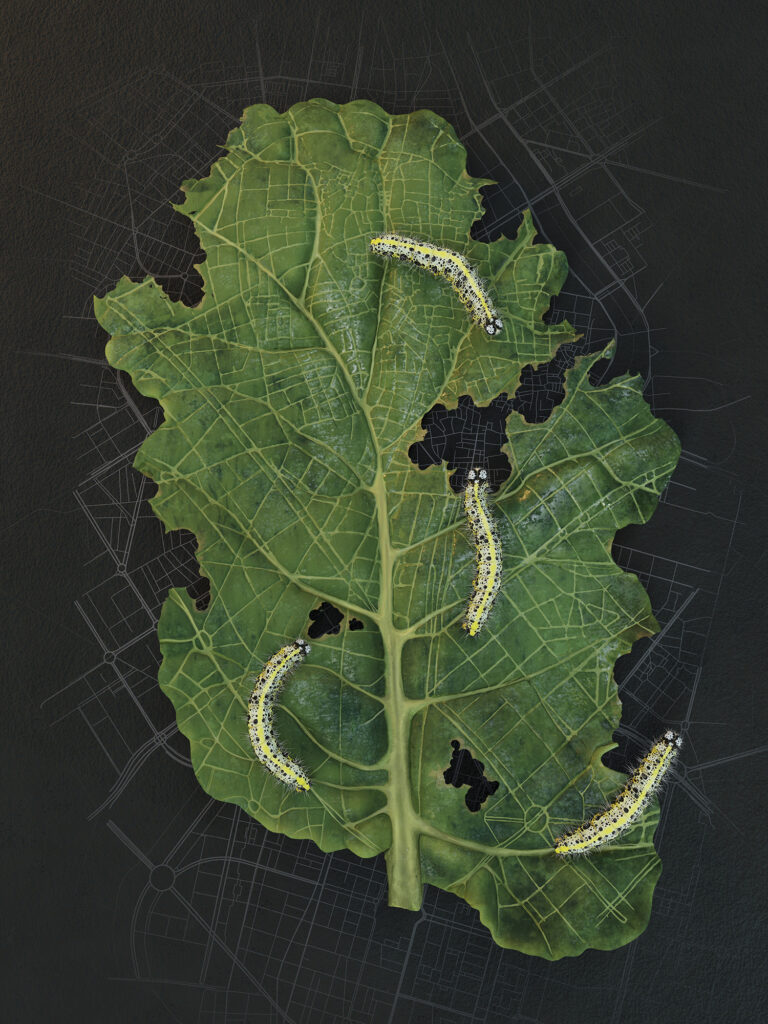
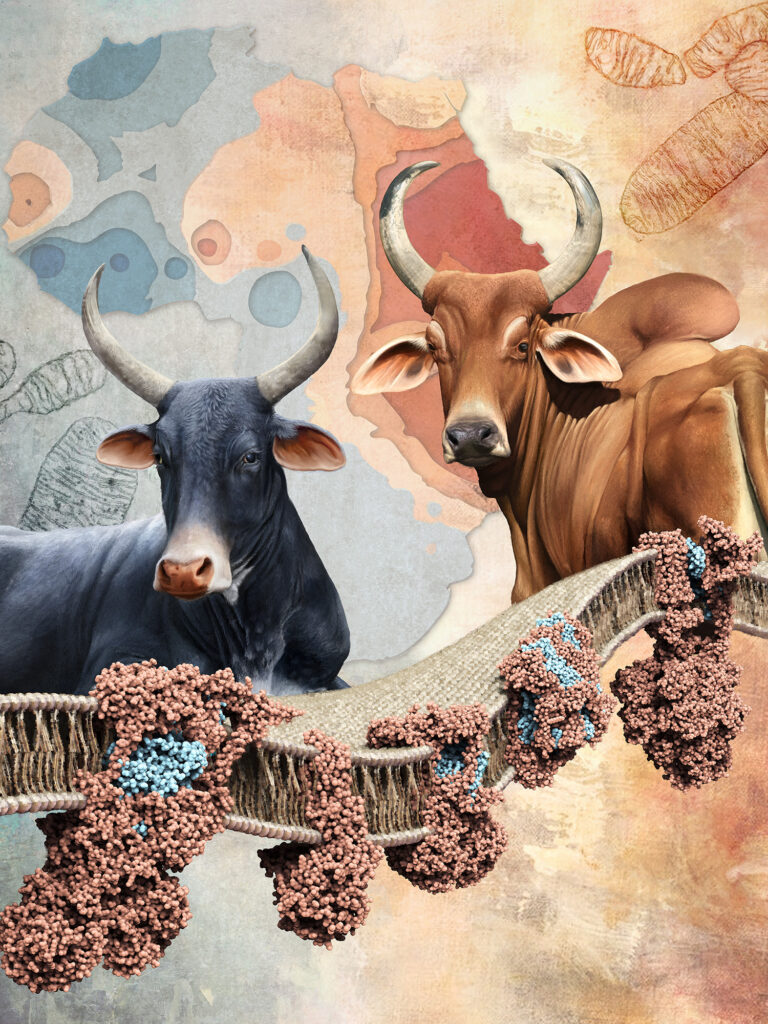
Limitations of Generative AI in Scientific Illustration
Artificial intelligence is a statistical tool, not a conscious observer. It does not understand physiology, biochemistry, or physical laws, nor does it grasp the specific context of novel research that has not yet been included in its training data.
Dependence on Preexisting Data
Generative artificial intelligence works from preexisting images on which it has been trained. It does not create new knowledge but establishes statistical correlations between already existing visual patterns.
In professional scientific illustration, this is a significant limitation. Often, it is necessary to represent newly described structures, emerging hypotheses, or experimental models without prior graphical precedents. When there are insufficient reference materials, AI lacks a solid basis to generate a reliable image.
In cutting-edge scientific contexts, where what is being communicated is entirely new, reliance on preexisting visual material becomes a critical limitation. AI can reproduce what has already been seen; professional scientific illustration must be able to represent what has not yet been visualized.
Common AI Errors in Scientific Contexts
Errors generated by AI systems are often subtle but can be critical from a scientific perspective. The most common issues include:
-
- Minor anatomical inconsistencies.
- Incorrectly combined biological structures.
- Altered proportions that affect functional interpretation.
These errors may go unnoticed by a non-specialist observer, but they invalidate the image in an academic or professional setting. AI tends to prioritize superficial visual coherence over conceptual accuracy, which is incompatible with the standards required in professional scientific illustration.
Lack of References and Traceability
One of the pillars of scientific rigor is the traceability of information. A professional illustrator works from specialized literature, experimental data, or direct communication with researchers, ensuring that every visual element can be justified.
In contrast, generative models are typically trained on large volumes of heterogeneous images, which may include previous errors or imprecise simplifications. This makes it difficult to guarantee the exact provenance of the visual information represented.
Without verified references, an image loses its value as a tool for scientific communication.
Lack of Conceptual Interpretation
Artificial intelligence does not interpret scientific concepts; it reproduces them statistically. If asked to depict a process such as cellular apoptosis, it will generate an image resembling existing ones but without understanding the steps involved.
A professional scientific illustrator, on the other hand, analyzes the process and decides which moment to emphasize, which elements to highlight, and which simplifications are acceptable without compromising meaning. This ability for conceptual synthesis is key to rigorous communication.
Scientific illustration is not about “looking correct”; it is about being correct.
If you are working on a research project and need to visualize these details with precision, check out my graphic consulting services.
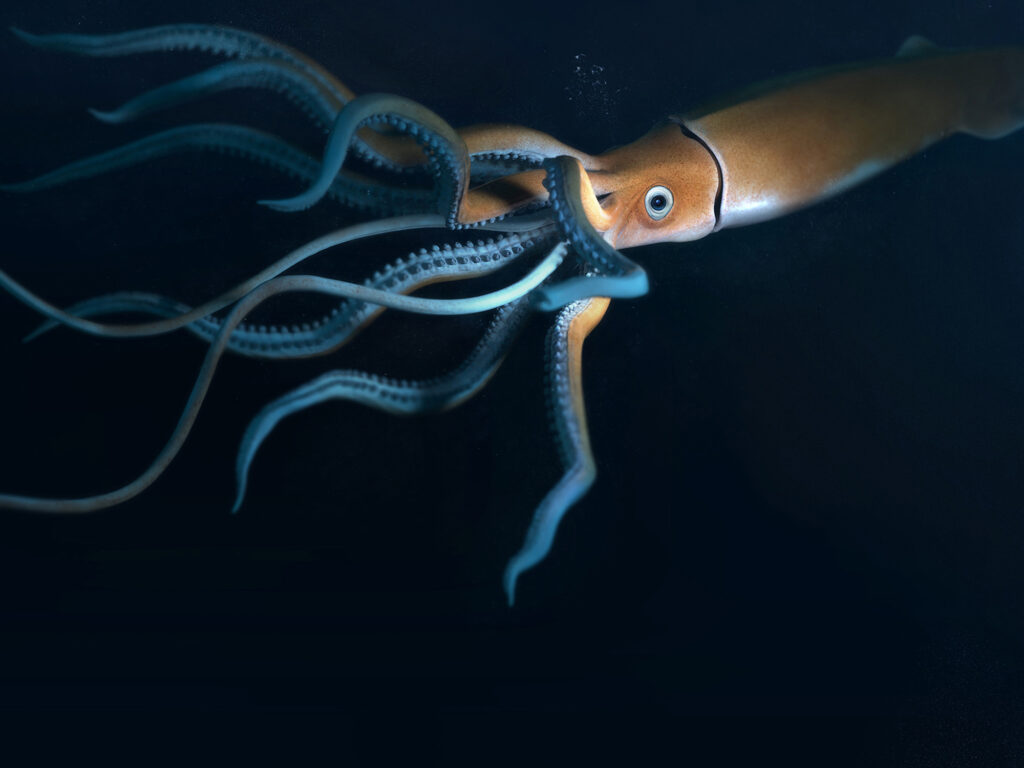
Scientific Illustration and Rigorous Communication
In academic, institutional, or medical contexts, an image is not merely decorative—it is part of the scientific content. An inaccurate representation can lead to misinterpretation, undermine the credibility of a publication, or compromise the clarity of a project.
For this reason, professional scientific illustration relies on analysis, expert validation, and technical control. AI, used without critical supervision, cannot meet these requirements on its own.
If you are conducting research and need to ensure that the visual representation of your data is rigorous, clear, and scientifically accurate, I can help transform your content into professional images aligned with current academic standards.
Best Practices for AI in Scientific Illustration
This does not mean that artificial intelligence is without value. When used judiciously, it can speed up certain phases of the creative process. For example:
-
- Rapid generation of preliminary compositional variations.
- Initial conceptual exploration.
- Testing lighting or atmospheres in outreach scenes.
However, in all cases, strict supervision of the generated content is required. AI can function as an auxiliary tool but can never replace the analysis, documentation, and expert validation that define professional scientific illustration.
The ultimate responsibility for the accuracy of the image always rests with the human professional.
Scientific Collaboration and Personalized Consulting
Collaboration between researchers and scientific illustrators is one of the most enriching synergies in the academic sphere. A rigorous image not only communicates results but can also enhance the clarity of a publication, improve understanding at conferences, and increase the visibility of a project.
If you wish to:
-
- Develop a figure for a paper.
- Create a strategic graphical abstract.
- Design outreach materials with a solid scientific foundation.
- Receive guidance on the best visual strategy for your research.
I am available to review your project on a personalized basis.
Every scientific project deserves a visual representation that matches its level of rigor.
Frequently Asked Questions About Scientific Illustration and Artificial Intelligence
Can artificial intelligence replace a professional scientific illustrator?
No. AI can generate visually convincing images, but it lacks conceptual understanding, expert validation, and scientific traceability—essential elements in professional scientific illustration.
What are the risks of using AI in scientific illustration?
The main risks include anatomical or structural errors, lack of verifiable references, and absence of scientific interpretation. In academic contexts, these mistakes can compromise the credibility of the project.
Is it possible to use AI responsibly in scientific illustration?
Yes, as long as it is used as a direct auxiliary tool under human supervision. AI can assist in preliminary conceptualization phases, but creative and scientific direction, the bulk of production, and scientific validation must remain the responsibility of a professional.
Why is expert validation essential in scientific illustration?
Because it ensures that every element depicted is consistent with scientific evidence and current knowledge. Without validation, an image may appear correct but contain critical errors.
Is expert validation necessary in a scientific illustration?
Yes. Expert validation is a defining element of professional scientific illustration. It ensures that proportions, structural relationships, and consistency with current scientific knowledge are accurate. This process minimizes errors and guarantees that the image serves as a reliable tool for communication.
Take your scientific publication to the next level.
Contact me for a personalized quote and ensure your data receives the visual rigor and attention it deserves.